
One of the most extraordinary aspects of Mount Kilimanjaro is how dramatically the environment changes with altitude. In just a few days, visitors pass through five distinct ecological zones, each with its own climate, vegetation, wildlife, and challenges. This rapid vertical transition shapes how the mountain feels, how climbers acclimatize, and how they should prepare.
Understanding these zones helps potential visitors visualize the journey—and plan clothing, pacing, and expectations realistically.
1) Cultivated / Farmland Zone (≈800–1,800 m)
This lowest zone lies outside the protected park boundary and is where most climbs begin.
What visitors experience
- Coffee and banana farms, villages, and footpaths
- Warm daytime temperatures and high humidity
- Views of the mountain rising abruptly above cultivated land
Why it matters
- This zone supports local livelihoods and frames Kilimanjaro’s human story
- It marks the transition from everyday life to wilderness
- Temperatures are typically 20–30°C (68–86°F) during the day
For first-time visitors, this area often feels deceptively easy—masking the scale of what lies above.
2) Rainforest Zone (≈1,800–2,800 m)


Once inside Mount Kilimanjaro National Park, climbers enter a dense tropical rainforest.
Key characteristics
- Tall trees, thick undergrowth, mosses, and ferns
- Frequent mist and rainfall
- Wildlife such as blue monkeys and black-and-white colobus monkeys
Climate
- Warm but cooler than the farmland zone
- Rainfall is common; trails can be muddy
- Temperatures usually range 10–20°C (50–68°F)
Why it matters
- This zone protects the mountain’s water catchment
- It is sensitive to erosion, which is why trails are strictly controlled
Visitors often experience their first real weather variability here.
3) Heather & Moorland Zone (≈2,800–4,000 m)
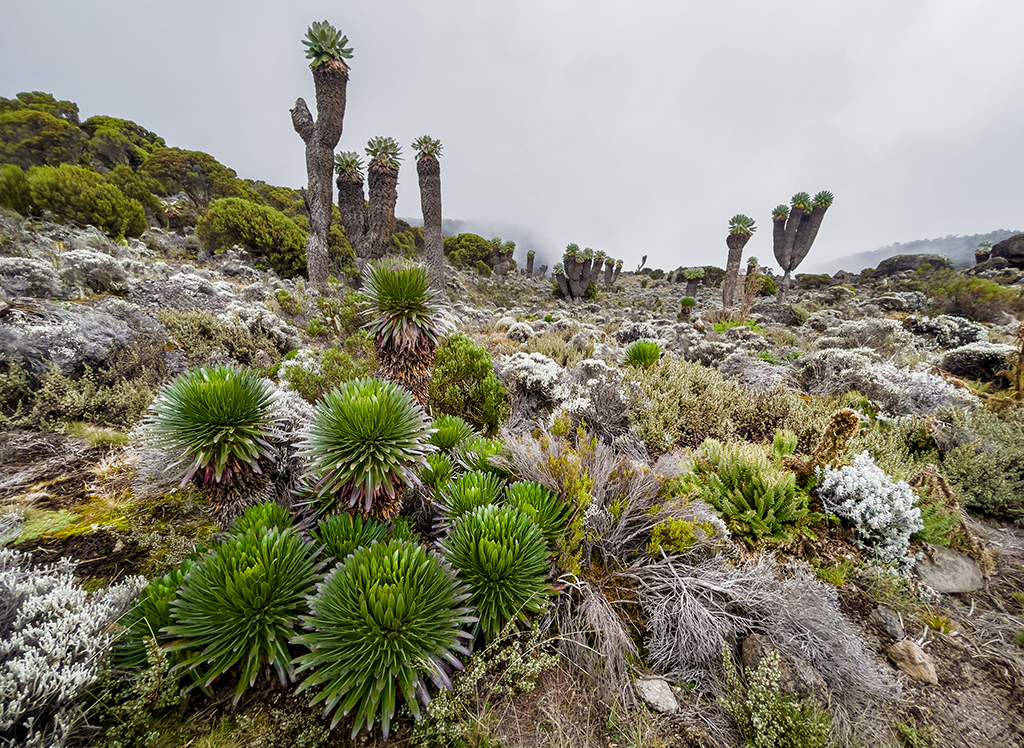

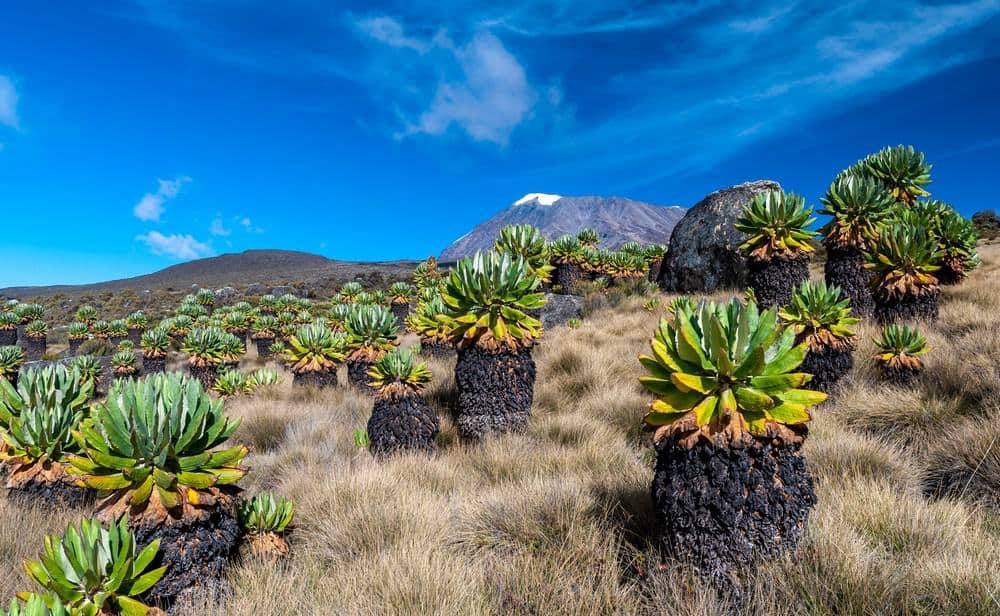
Above the forest, the landscape opens dramatically.
What defines this zone
- Giant lobelias and senecios adapted to cold nights and strong sun
- Rolling terrain with expansive views
- Clearer skies and stronger solar radiation
Climate
- Warm sun during the day, cold nights
- Temperatures typically 0–15°C (32–59°F)
- Large day–night temperature swings
Why it matters for climbers
- This is where altitude effects often begin to be felt
- Nights become noticeably colder
- Acclimatization starts to matter more than physical strength
For many visitors, this zone is the most visually surprising—African plants adapted to near-freezing conditions.
4) Alpine Desert Zone (≈4,000–5,000 m)


Despite its equatorial location, Kilimanjaro’s upper slopes resemble a cold desert.
Defining features
- Sparse vegetation or none at all
- Volcanic rock, scree, and dust
- Extremely dry air
Climate
- Strong winds
- Intense solar radiation during the day
- Temperatures from –5°C to 10°C (23–50°F)
Why it matters
- Dehydration risk increases due to dry air
- The body works harder at altitude
- Sleep quality often declines
This zone prepares climbers—physically and mentally—for the summit environment.
5) Arctic Zone: Glaciers & Ice Fields (5,000 m+)

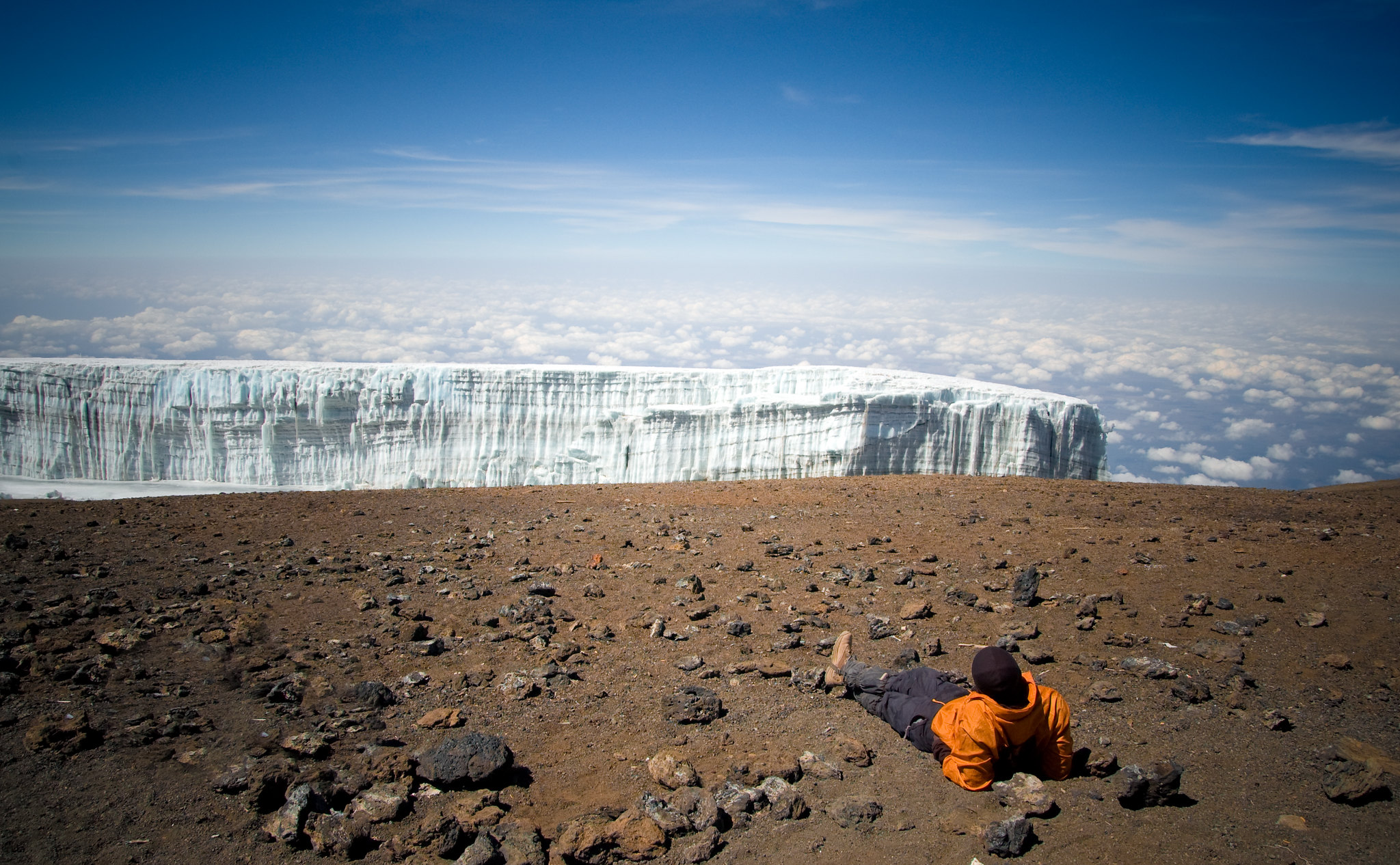

The highest zone surrounds Uhuru Peak and represents true high-altitude conditions.
What visitors encounter
- Snow, ice fields, and exposed rock
- Extremely thin air (≈50% of sea-level oxygen)
- No vegetation
Climate
- Temperatures can drop to –15°C to –25°C (5°F to –13°F) with wind chill
- Strong winds are common
- Weather can change rapidly
This zone is short-lived for climbers but often the most memorable.
Temperature Variation by Altitude: What to Expect
A useful rule of thumb on Kilimanjaro:
- Temperature drops roughly 6–7°C (10–12°F) for every 1,000 m gained
This means a single climb can span:
- Hot tropical afternoons
- Cold, near-freezing evenings
- Sub-zero summit conditions
Layering is essential because conditions can shift dramatically within a single day.
Weather Patterns at Different Elevations
Weather on Kilimanjaro is influenced by both altitude and regional seasons.
Lower zones
- Rainfall concentrated in the rainforest
- Warm, humid conditions
Mid zones
- Clearer skies
- High solar exposure
- Cold nights
Upper zones
- Dry, windy, and cold
- Sudden storms possible near the summit
This vertical weather gradient explains why climbers may walk through rain in the morning and face freezing winds at night.
Why Vertical Ecology Matters for Visitors
Understanding Kilimanjaro’s ecological and climatic zones helps visitors:
- Pack appropriate clothing for each stage
- Recognize why acclimatization is critical
- Appreciate the mountain as a living ecosystem, not just a summit
Kilimanjaro is unique because it compresses multiple worlds into one climb—from farmland and rainforest to arctic ice—making it one of the most diverse trekking experiences on Earth.