
What summit day is really like — and why most success or failure is decided here
For most climbers, summit day on Mount Kilimanjaro is the most demanding, emotional, and defining part of the entire journey. It is not the longest day by distance, but it is the day where altitude, cold, fatigue, and mindset converge. Understanding what happens on summit night—and why people succeed or turn back—helps visitors prepare realistically and safely.
Summit Night Timing: Why the Climb Starts at Midnight
Most summit attempts begin between 11:00 PM and 1:00 AM, depending on the route and conditions.
Why such an early start?
- Frozen scree is more stable underfoot before sunrise
- Winds are often calmer at night than later in the day
- Reaching the crater rim at sunrise reduces exposure time
- Allows enough daylight for a safe descent
For visitors, this means:
- You wake after only a few hours of sleep
- You start hiking in complete darkness using headlamps
- The body is cold, stiff, and already fatigued
Summit night is intentionally conservative and slow—it is designed around safety, not comfort.
High Camps: Barafu Camp & Kibo Hut


4
Summit attempts are staged from one of two main high-altitude camps, depending on the route.
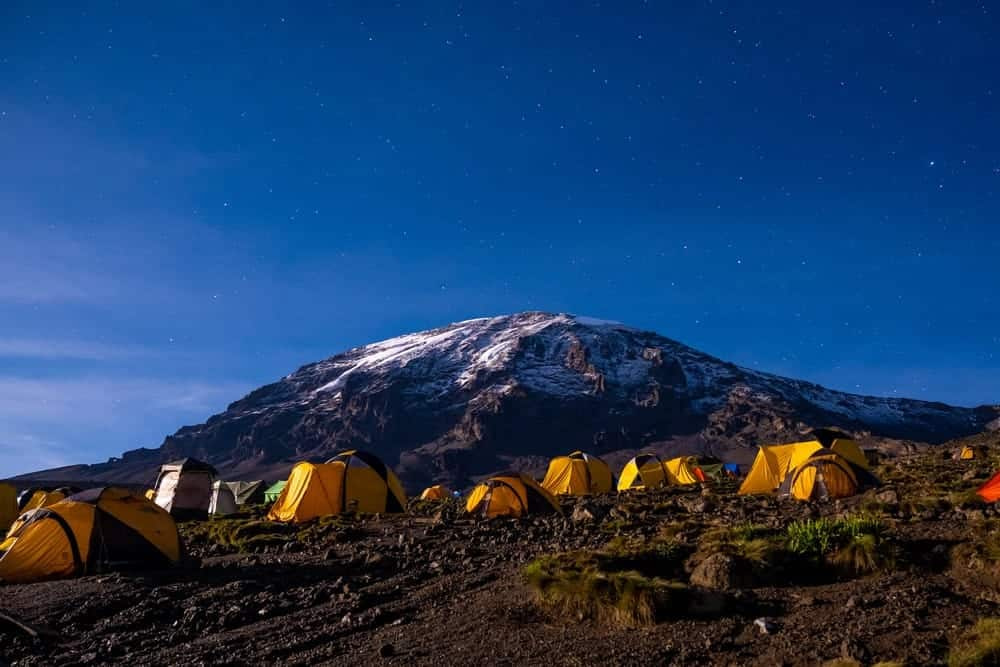
Barafu Camp (≈4,600 m)
Used by most routes (Lemosho, Machame, Northern Circuit, Rongai).
- Exposed, rocky campsite
- Very cold and windy
- Minimal shelter
- Little sleep due to altitude
Kibo Hut (≈4,700 m)
Used primarily by the Marangu Route.
- Enclosed hut accommodation
- Slightly more shelter from wind
- Still very cold and oxygen-poor
Key point for visitors:
Regardless of comfort level, sleep quality at these altitudes is poor. This is normal and expected.
The Climb to the Crater Rim: Stella Point
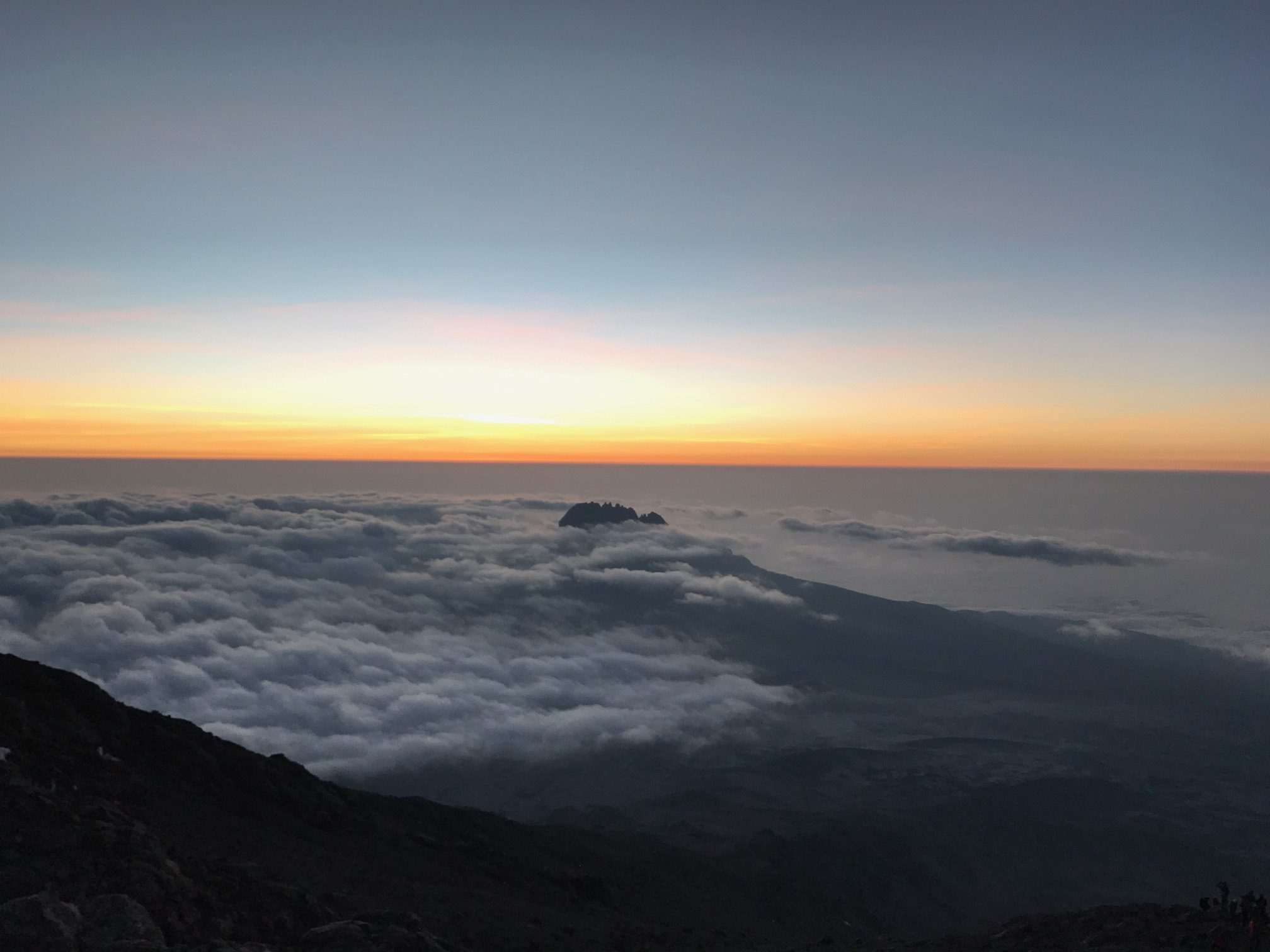

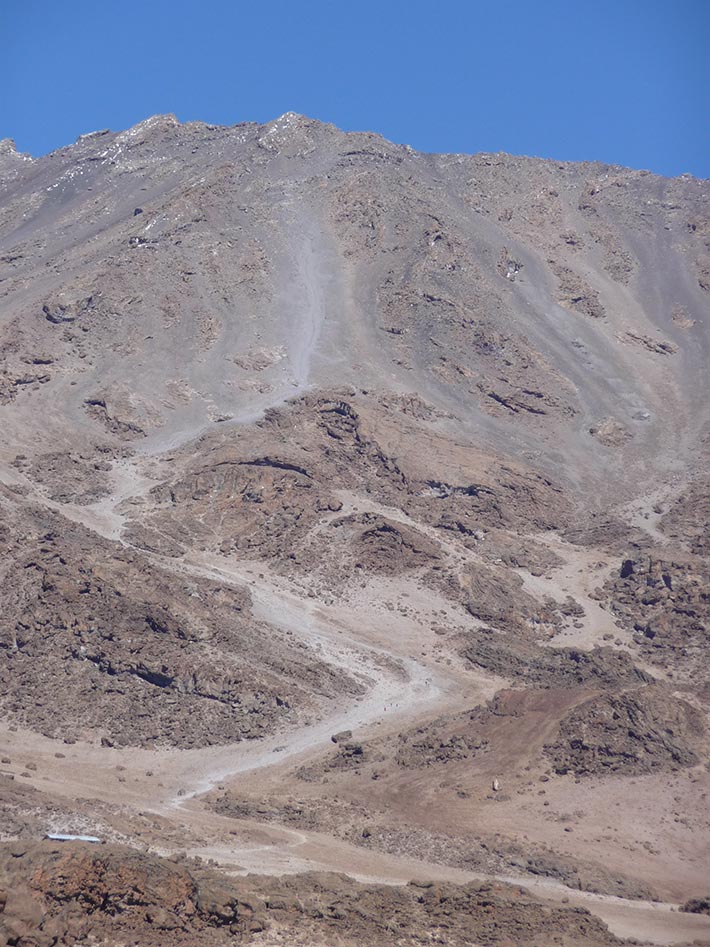
From high camp, climbers ascend steep volcanic scree toward the crater rim.
Most climbers reach the rim at Stella Point (≈5,756 m).
Why Stella Point Matters
- It is the steepest and most physically taxing section
- Many climbers reach their physical and mental limit here
- Sunrise often occurs at or near Stella Point
- Reaching Stella Point is already a major achievement
Guides often reassess climbers here before continuing.
Stella Point vs Uhuru Peak: Understanding the Final Push
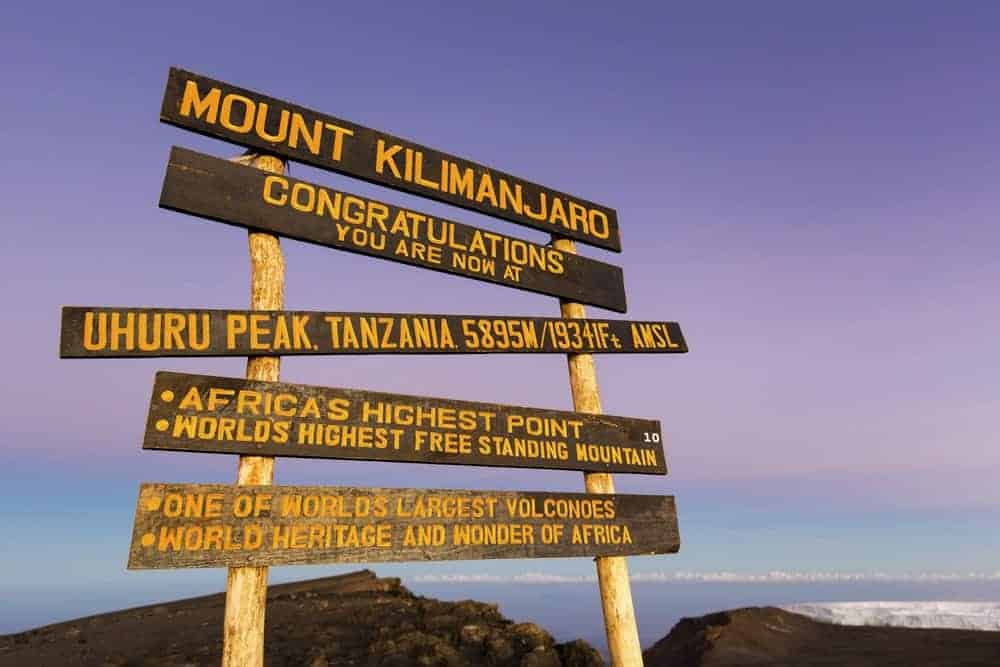
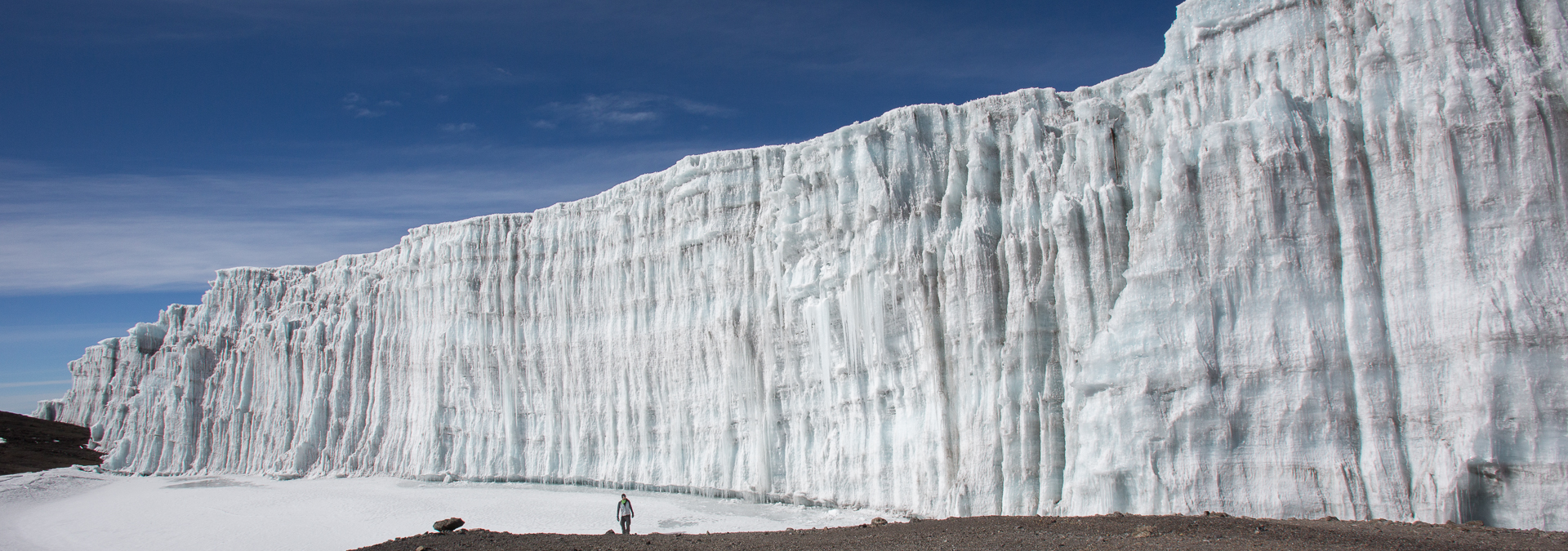
After Stella Point, the route continues along the crater rim to Uhuru Peak, the highest point in Africa.
Key differences
- Stella Point → Uhuru Peak is less steep
- Distance is longer than it appears
- Oxygen levels are even lower
- Wind exposure increases
Many climbers underestimate this final section. Although technically easier, it requires mental resilience at extreme altitude.
Cold, Wind & Oxygen Levels at the Summit
Despite being near the equator, summit conditions are arctic.
Typical conditions
- Temperatures: –10°C to –20°C (14°F to –4°F)
- Wind chill can push it much lower
- Oxygen availability: ~50% of sea-level levels
Effects on climbers:
- Slowed movement and thinking
- Increased fatigue
- Numb fingers and toes
- Difficulty regulating body temperature
Proper layering and slow pacing are critical. This is where gear choices truly matter.
Mental vs Physical Challenge: What Really Determines Success
Contrary to expectations, summit day is more mental than physical.
Physical factors
- Slow, shuffling pace
- Short steps
- Controlled breathing
Mental factors
- Managing discomfort
- Ignoring the urge to rush
- Staying focused despite exhaustion
- Trusting the process
Most climbers who turn back are physically capable but mentally overwhelmed by altitude, cold, or fatigue.
Typical Reasons Climbers Do Not Reach the Summit
Understanding failure is as important as understanding success.
Common reasons for turning back
- Worsening AMS symptoms
- Extreme fatigue
- Cold-related issues (poor circulation, inadequate gear)
- Loss of coordination or confusion
- Inability to maintain slow, steady pace
Turning back is not failure—it is a correct safety decision made by experienced guides.
What Successful Summit Climbers Have in Common
Climbers who reach Uhuru Peak safely typically:
- Chose longer itineraries
- Moved slowly throughout the climb
- Ate and hydrated even when appetite was low
- Dressed properly for extreme cold
- Listened to their guides
- Accepted discomfort without panic
Summit success is built days earlier, not on summit night itself.
What Visitors Should Expect Emotionally
Many climbers expect euphoria at the summit. In reality:
- Emotions are often muted due to altitude
- Relief and quiet satisfaction are common
- Celebration usually comes after descent, not at the top
This is normal. The body is in survival mode at extreme altitude.
Key Takeaways for Visitors
- Summit night is slow, cold, and mentally demanding
- Stella Point is a major milestone, not a failure point
- Uhuru Peak is reached through patience, not force
- Turning back is sometimes the right outcome
- Preparation and acclimatization determine success
Bottom Line
Summit day on Mount Kilimanjaro is not about pushing harder—it is about endurance, judgment, and humility. Climbers who understand what to expect, respect altitude, and trust the process dramatically increase their chances of standing on Uhuru Peak safely.