
What you can realistically see, what you cannot, and why Kilimanjaro is ecologically unique—but not a safari destination
Mount Kilimanjaro is often misunderstood in terms of wildlife. While it is biologically rich and ecologically significant, it is not a classic wildlife-viewing destination in the way Tanzania’s savannah parks are. Understanding Kilimanjaro’s biodiversity helps visitors set accurate expectations and appreciate the mountain for what it truly offers.
Biodiversity on a Vertical Gradient
Kilimanjaro’s biodiversity is shaped by altitude and habitat compression. In a horizontal distance of just a few kilometres, ecosystems shift from cultivated land to rainforest, moorland, alpine desert, and arctic summit conditions.
This vertical ecology means:
- Wildlife diversity is highest at lower elevations
- Large mammals thin out rapidly with altitude
- Plant life becomes more specialized and endemic as conditions become harsher
Kilimanjaro’s ecological value lies more in adaptation and transition than in sheer animal density.
Forest Wildlife: The Most Biodiverse Zone

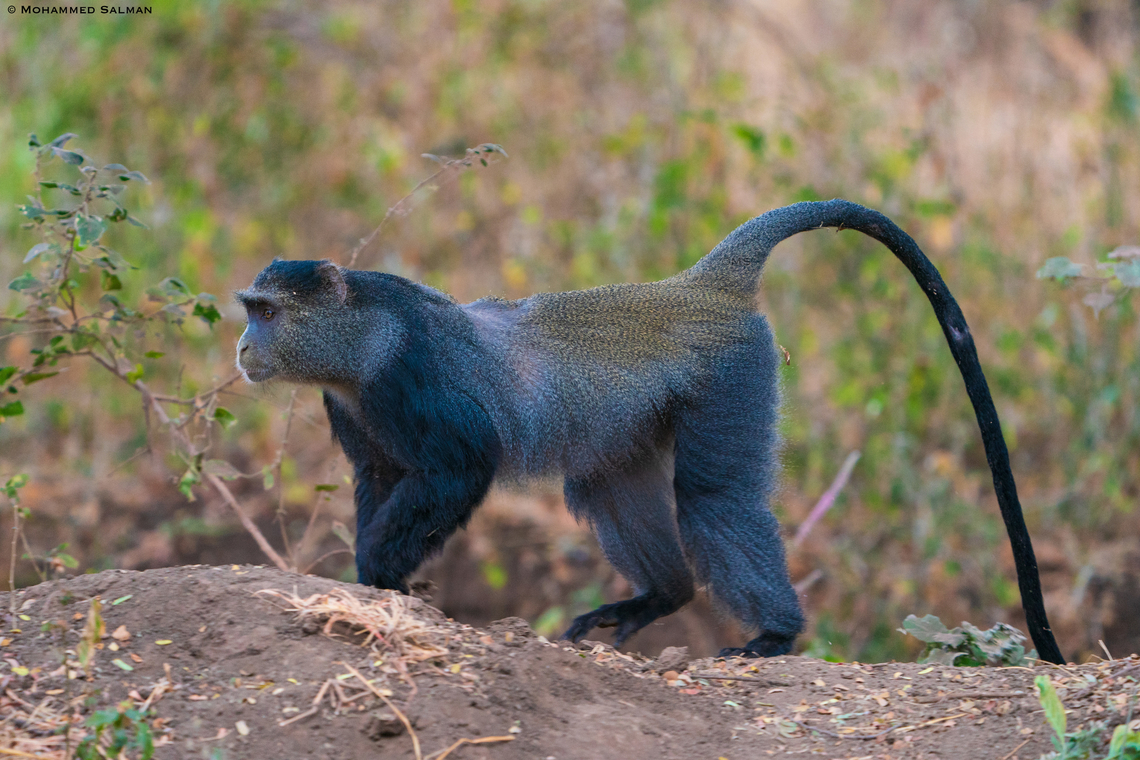

The rainforest zone (approximately 1,800–2,800 m) supports the greatest concentration of wildlife on the mountain.
Primates
Visitors commonly encounter:
- Black-and-white colobus monkeys – often seen high in the canopy
- Blue monkeys – more active and vocal
These primates are the most visible mammals on most climbs and are frequently seen during the first one to two days.
Birdlife
Kilimanjaro’s forests support over 170 bird species, including:
- Turacos
- Hornbills
- Sunbirds
- Forest thrushes
Birdwatchers often consider Kilimanjaro underrated, particularly in the lower forest zone where species diversity is highest.
Large Mammals in the Lower Zones (Rare but Possible)
Large mammals do exist on Kilimanjaro, but sightings are uncommon and largely restricted to the lower forest margins.
Species occasionally present include:
- Forest elephants
- Buffalo
- Bushbuck
- Duiker
Important for visitors:
These animals are elusive, avoid human activity, and are rarely seen by climbers. Guides are trained to manage encounters, but wildlife viewing is incidental—not a focus of the climb.
Heather, Moorland & Alpine Zones: Adaptation Over Abundance
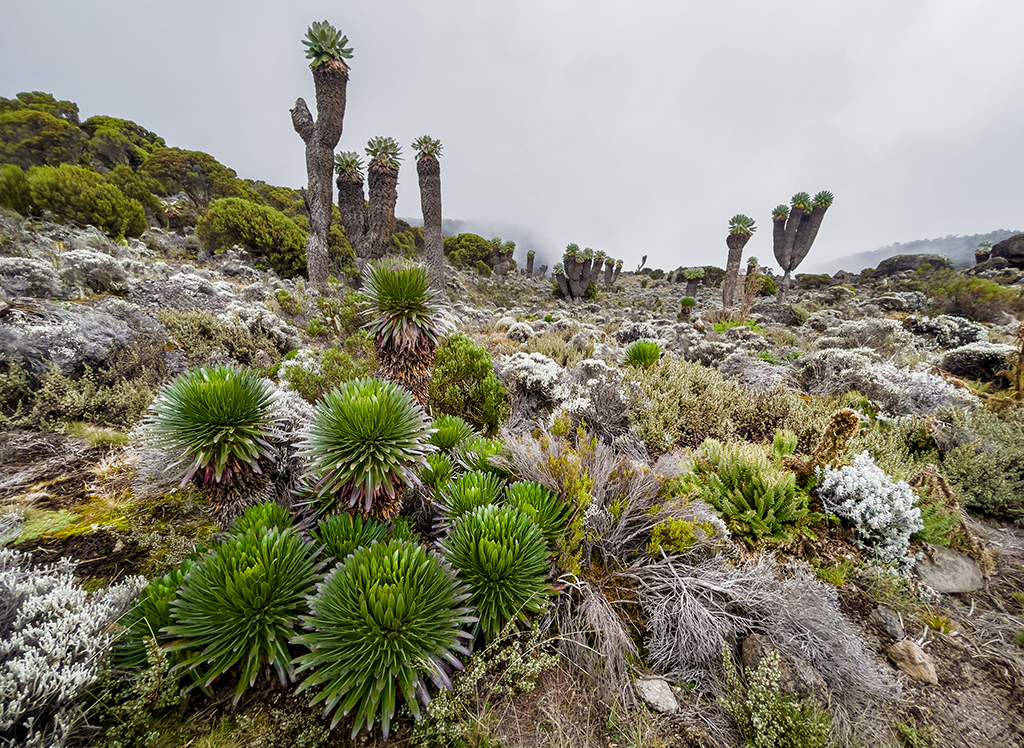


As altitude increases, animal life decreases sharply, while plant adaptation becomes the defining ecological feature.
Iconic Altitude-Adapted Plants
- Giant lobelias – store water and protect their core from freezing
- Giant groundsel (senecio) – insulated trunks and compact leaf crowns
These plants are endemic or near-endemic to East African high mountains and are among Kilimanjaro’s most striking biological features.
High-Altitude Fauna
Animal life above the moorland zone is minimal, but may include:
- Small rodents
- Occasional birds of prey
- Insects adapted to cold, dry conditions
At these elevations, survival strategies, not biodiversity, define life.
Endemic & Specialized Species: Why Kilimanjaro Matters Ecologically
Kilimanjaro is important not because of large animal numbers, but because it:
- Hosts altitude-restricted plant communities
- Serves as a water catchment for surrounding ecosystems
- Acts as a climate-change indicator, especially through glacial retreat
Many species found on Kilimanjaro are limited to a narrow altitude range, making them highly sensitive to environmental change.
Why Kilimanjaro Is Not a Safari Mountain
This is a critical clarification for visitors.
Key reasons:
- Dense forest limits visibility
- Animals are shy and avoid human traffic
- Climbing routes prioritize safety and conservation, not tracking
- Wildlife density is low compared to savannah ecosystems
Unlike Serengeti National Park or Ngorongoro Conservation Area, Kilimanjaro is not managed or designed for game viewing.
How to Combine Kilimanjaro with a Safari (Best Practice)
Most visitors seeking wildlife experiences:
- Climb Kilimanjaro first
- Then travel to savannah parks for safari
Common combinations include:
- Kilimanjaro + Serengeti
- Kilimanjaro + Ngorongoro Crater
- Kilimanjaro + Tarangire
This approach ensures:
- Realistic expectations
- A better overall experience
- Appreciation of Tanzania’s ecological diversity
Conservation Value Beyond Wildlife Viewing
Kilimanjaro’s biodiversity significance lies in:
- Protecting transition ecosystems
- Preserving rare alpine plant species
- Supporting downstream agriculture and communities
- Maintaining ecological connectivity
Climbers contribute to conservation through park fees and regulated access, even if wildlife sightings are limited.
Key Takeaways for Visitors
- Wildlife is most visible in the rainforest zone
- Primates and birds are the most common sightings
- Large mammals are rare and incidental
- Plant adaptation is Kilimanjaro’s ecological highlight
- Kilimanjaro is a trek, not a safari
Bottom Line
Mount Kilimanjaro is biologically rich, but in a subtle, scientific, and altitude-driven way. Visitors who approach it as an ecological journey—rather than a wildlife spectacle—gain a deeper appreciation for the mountain’s uniqueness. For classic wildlife encounters, pairing Kilimanjaro with a dedicated safari destination delivers the best of both worlds.